All of Channeltivity's integrations with Salesforce require authorization through a valid Salesforce user account with API access. This article provides instructions for configuring a Salesforce user with the appropriate permissions and connecting Channeltivity to Salesforce using OAuth authorization.
OAuth allows Channeltivity to securely access Salesforce through an authorization process without requiring you to manually enter your Salesforce password or security token into Channeltivity.
NOTE: Channeltivity's Salesforce integrations use the Salesforce API. API availability depends on your Salesforce edition and licensing.
You can connect Channeltivity to Salesforce using either a Salesforce user account associated with a paid Salesforce user license or a Salesforce Integration user License.
Connecting Channeltivity to Salesforce (Paid Salesforce User License)
Have your Salesforce Admin follow the steps listed below to configure your Channeltivity instance to connect to Salesforce:
Step 1: Verify Salesforce User Permissions
Log in to Salesforce and navigate to Setup > Users > Profiles.
Locate the profile associated with the Salesforce user who will authorize the integration.
Verify that the user has the necessary permissions for the integration.
The existing Channeltivity integration requirements include:
API Enabled
Modify All Data
Customize Application
Manage Profiles and Permission Sets
Appropriate Login Hours and Login IP Range settings that allow the integration to operate
Note: Your Salesforce Administrator should review these permissions and any applicable security restrictions before authorizing the integration.
Step 2: Authorize the Salesforce Integration in Channeltivity
Log in to Channeltivity as a System Administrator.
Navigate to Settings > Salesforce Integration > Settings & Credentials.
Locate the Salesforce integration credentials and select the ellipsis (three dots) > Authorize option.
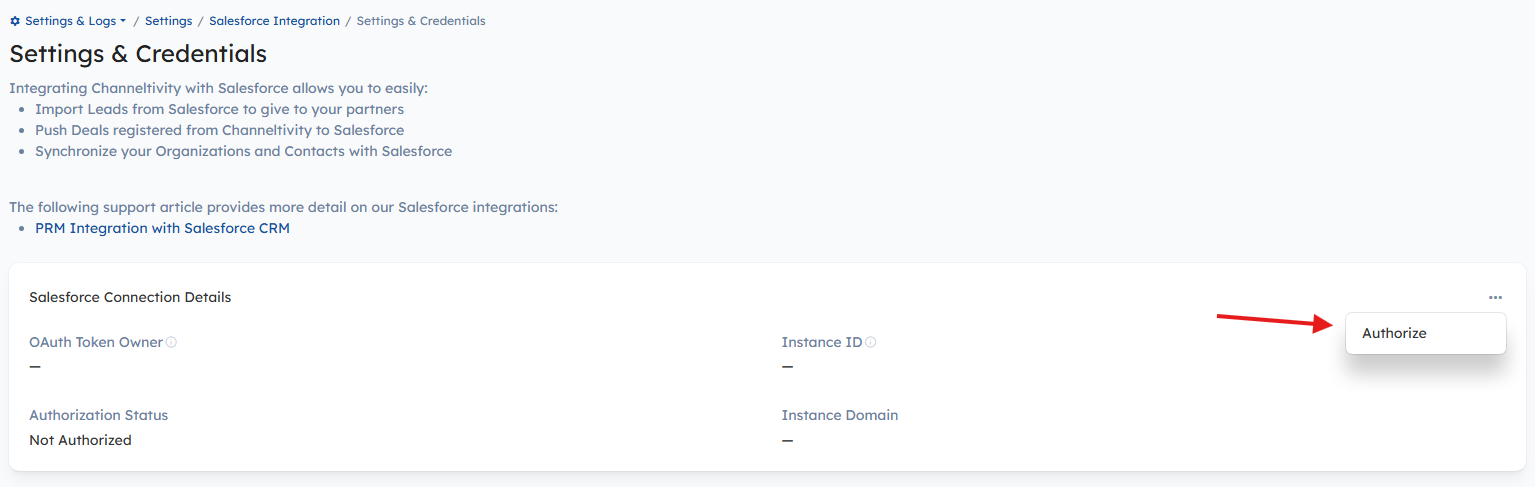
Start the Salesforce OAuth authorization process using the authorization option provided.
When redirected to Salesforce, sign in using the Salesforce account configured for the integration.
Review and approve the requested access, if prompted.
Return to Channeltivity and verify that the Salesforce connection has been authorized successfully.
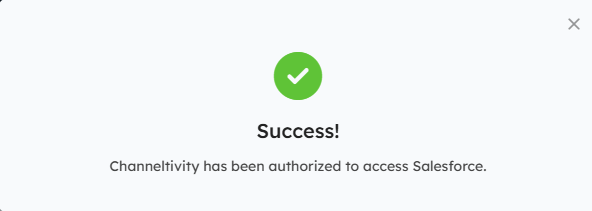
Once the connection is established, you can configure and enable Channeltivity's Salesforce integrations.
Connecting Channeltivity to Salesforce (Free Integration User License)
Salesforce offers dedicated Integration User Licenses designed for system-to-system integrations. These users can access Salesforce through the API without requiring a standard paid Salesforce user license.
Salesforce includes five Integration User Licenses with certain editions, including Enterprise, Unlimited, and Performance. Availability may vary depending on your Salesforce edition and licensing.
To configure a Salesforce Integration User for Channeltivity, follow the steps below.
Step 1: Create a Salesforce Integration User
Log in to Salesforce as an Administrator and navigate to Setup > Users > Users.
Click New User.
Enter the required user information.
Select Salesforce Integration as the User License.
Select the appropriate API-only integration profile available in your Salesforce environment.
Save the user.
Step 2: Configure the Integration User Permissions
In Salesforce, navigate to Setup > Users > Permission Sets.
Click New to create a permission set.
Enter a label such as Channeltivity Integration Permissions.
Under the permission set license options, select Salesforce API Integration.
Save the permission set.
Under System Permissions, enable the permissions required for the Channeltivity integration, including:
Modify All Data
Customize Application
Manage Profiles and Permission Sets
Save your changes.
Click Manage Assignments and assign the permission set to the Integration User created in Step 1.
Step 3: Authorize the Salesforce Integration
Channeltivity uses OAuth authentication to establish a secure connection with Salesforce.
Salesforce Integration Users are designed for API-only access and may require a different OAuth authorization method than standard Salesforce users.
For assistance connecting Channeltivity using a Salesforce Integration User License, please contact Channeltivity Support.
Once the connection has been successfully authorized, you can configure and enable the appropriate Salesforce integrations.
Common Salesforce Credential Issues
If you experience problems connecting Channeltivity to Salesforce, review the following items.
1. Insufficient Salesforce Permissions
Verify that the Salesforce account used for the integration has the necessary API, system, and object permissions.
Check the user's Profile and assigned Permission Sets in Salesforce.
2. Salesforce Authorization Was Not Approved
During the OAuth authorization process, Salesforce may require approval before allowing Channeltivity to access the account.
If authorization is denied or blocked, contact your Salesforce Administrator to review the application's access settings.
3. Login or Security Restrictions
Salesforce security settings, including login restrictions, IP restrictions, or account lockouts, may prevent authorization.
Review the affected user's Salesforce login history and security settings to identify any restrictions.
4. Salesforce Integration User Restrictions
Salesforce Integration users may have API-only access and cannot necessarily authenticate through the standard Salesforce login interface.
If authorization fails when using an Integration User License, verify that the account and authorization method are supported.
5. Authorization or Connection Errors
If the connection fails or Channeltivity reports an authorization error:
Verify that the correct Salesforce environment and user account are being used.
Confirm that the account has the required permissions.
Review any error messages displayed during authorization.
Contact Channeltivity Support if the issue persists.
For assistance, submit a support ticket or contact support@channeltivity.com.
Was this article helpful?
That’s Great!
Thank you for your feedback
Sorry! We couldn't be helpful
Thank you for your feedback
Feedback sent
We appreciate your effort and will try to fix the article